
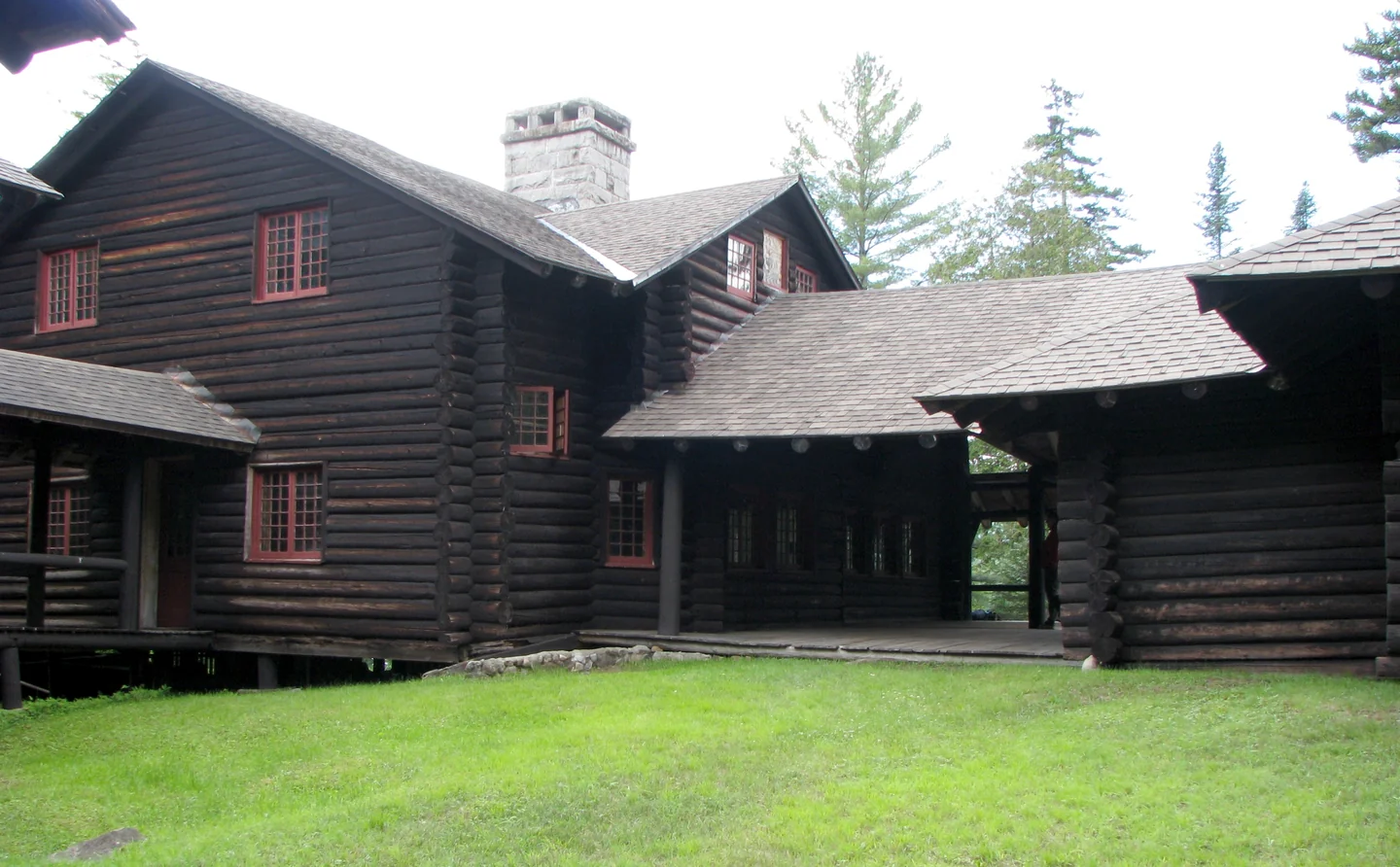
At Santanoni, the idea of keeping a camp for the next generation becomes tangible. Its log buildings remain here because people choose to care for them. Bring someone who has never seen an Adirondack camp, and there is a chance to share a beautiful place and the story of why it matters enough to keep.
It begins with the Pruyns
Construction began in 1892 for Robert and Anna Pruyn of Albany. Their estate brought together an entrance complex, a farm and the Main Camp on Newcomb Lake. Today, Santanoni is a National Historic Landmark within the Adirondack Forest Preserve in the Town of Newcomb.
The names and dates are a beginning. The personal connection comes in imagining the days that filled the place: another season opening, visitors arriving, the pleasures and work of making a home in the woods. A camp with this much history invites you to think beyond the years you will spend there yourself. 1
The people behind a summer at camp
The Department of Environmental Conservation's account describes a farm, service buildings and staff housing that supported the estate's self-sufficiency. A summer at camp depended on many hands.
The people who raised food, made repairs and kept everything going belong in the story, too. Their work connects the farm and the service buildings to the life at the Main Camp. Following those connections brings a much fuller sense of how a retreat became a place of welcome. 2
Someone decides it is worth keeping
Adirondack Architectural Heritage's conservation account describes the substantial work that saved Santanoni's boathouse, along with care for porches and other buildings across the camp. Those records tell a continuing story of people choosing to keep the place here.
It is worth pausing over what those repairs make possible. A building remains available for someone to see, ask about and remember. The work itself becomes another chapter in its history, alongside the names of the original owners and builders.
For anyone considering an older camp, this is an appealing way to think about care. A repaired porch, a window kept in service or a carefully preserved photograph can carry something forward. You can make a place your own while giving its earlier story room to remain visible. 3
Make time for the journey
DEC describes the approach to the Main Camp as a roughly five-mile former carriage road, with public motor vehicle use prohibited. The historic area is cared for and interpreted through a partnership involving DEC, AARCH and the Town of Newcomb.
If you are planning a visit, check the official information for current conditions and access arrangements. Choose a way of traveling that suits your group, allow time for the return and leave some room in the day for questions. The journey deserves its own preparation.
You might bring a notebook or take a photograph of a detail you want to remember. Let each person choose what interests them. A shared day at Santanoni could become a reason to return, with more of the story to discover next time. 2
Santanoni's story belongs to the people who created it, the people who have cared for it and those who come to learn from it. Spending time with that story is one way to become more connected to the Adirondacks.
Notes & further reading
Historical and ownership sources reviewed October 12, 2026. Photographs show the named heritage camps.